


A school district in New York just spent $57,590 on a humanoid robot named Sally, then hit pause days before the robot reached the classroom. The story behind robots for education is messy, and a lot more revealing than the headlines.
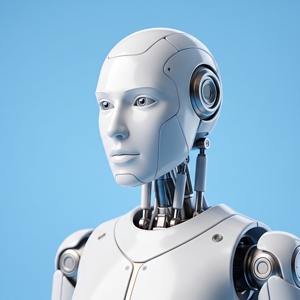
A small, rural school district in Western New York called Salamanca announced that it was going to be one of the first districts in the country to put a humanoid robot in a classroom this fall. The district sits on the Seneca Nation reservation, serves about 1,300 students, of which roughly 79% are economically disadvantaged.
The robot has a name. Sally. She was going to sit in the high school’s technology and robotics courses, the ones built on a curriculum from Apple co-founder Steve Wozniak, and the robot was going to help students work through problems. The district paid about $57,590 for the robot and an avatar program that students could talk to on their laptops.
Now, the superintendent was careful about the setup. He made sure that the robot would run on a closed system with no internet connection and no data collection. That’s important because of NY Student Data Privacy Laws. He said the robot was trained on the district’s own curriculum, and that instead of making up answers (hallucinations), the robot would simply say, “I don’t know.” If a student typed anything about self-harm, it would flag a real adult. According to the superintendent, Sally doesn’t hand a student the answer. She helps the student get to the answer. All good protocols for robots in education.
The company that makes the robot Sally, Realbotix, used to be a cryptocurrency business. But in 2024 it bought the parent company that makes adult sex dolls. The company says the two operations don’t share staff or technology, and that it’s working to separate them entirely. You can imagine how that detail landed with parents. Not well!!
Then July 24th, the state’s Education Commissioner, Betty Rosa, sent the district a letter. She wrote that the NYS Education Department was concerned about the effect a humanoid robot might have inside a high school classroom. The Commissioner pointed to worries parents, teachers, and community members were raising. Especially since the robot looks like a person. Within hours, the district had no recourse but to hit pause. They said they’d put the project on hold while they worked through stronger student data privacy agreements with the state and keep talking with their community.
So the robot is not banned; just parked. And the reason robots for education were sidelined? Officially, it comes down to two things: privacy, and the discomfort of a lifelike machine sitting among teenagers.
Here’s something that made me smile in a cynical sort of way. Robots for education are not a new concept.
Let’s go back to 2018 in the Boston area. At The English High School in Jamaica Plain, students were handed a four-foot humanoid robot named Pepper, donated by a company called SoftBank Robotics. The robot showed up as a blank slate. The students were the ones who brought it to life. They programmed it to dance, to fist-bump, to spin in a circle, even to play a little air saxophone. It was the centerpiece of Computer Science Week, celebrated by the whole district. One eleventh grader even said that sometimes when the robot talked back, it felt like a person.
Now notice what did not happen with these robots for education. No outrage. No letter from the Commissioner. No union statement. Nobody panicked. Why? Because the kids were in the driver’s seat. That robot wasn’t there to teach them. They were there to teach the robot.
Now fast forward to 2024. The New York State School Boards Association held its big annual convention in Manhattan, and do you know how they kicked it off? With an on-stage interview of a famous humanoid robot named Sophia. The association proudly said that headlining with her put artificial intelligence in schools, and robotics for education “at the forefront” of what school leaders would face. A robot was the exciting keynote. I am a school board member and was at the convention. It was all about how AI and robots in education will shortly be coming to schools everywhere. School board members were encouraged to be forward thinking about AI in schools and about robots in education; to embrace the future and actively seek out opportunities.
Now two years later, a robot named Sally, built by an outside company, arrives to sit among teenagers in a real classroom in a poor rural district. And that school gets a letter from the Commissioner and a pause. By the way, the commissioner was also at the 2024 convention!
So students programming a robot? A celebration. A robot on a keynote stage? A headliner. A pre-built robot placed three feet from your own kid? A crisis. I’m not saying any of the reactions are silly. I’m saying there’s another issue going on. It’s about control.
It appears that the teachers’ union had some strong opinions. New York’s largest teachers’ union, NYSUT, which represents close to 700,000 teachers, came out swinging. Their president stated bluntly that a robot built by a company associated with sex dolls has no business in our classrooms. She argued that students need real relationships with caring adults, the kind who notice when a child is struggling, celebrate when they succeed, and help them figure out who they can become. No robot, she said, can do that, no matter how lifelike. The union promised to fight what it called the thoughtless expansion of this technology and to explore every avenue necessary.
Interestingly, the Commissioner’s letter did not mention the union. The official reasons were privacy and the concern over the humanoid aspect.
Now let’s talk about something that points to why artificial intelligence in schools and robots for education isn’t a fad that’s going to blow over.
Let’s start with demographics. We are having far fewer children. Since 2007, the number of births in this country has dropped by about 18 percent. That’s roughly 718,000 fewer babies born in a single recent year. Fewer babies today means fewer students tomorrow. The federal government projects that public school enrollment will keep falling, down to about 46.9 million students by 2031, with enrollment lower in 40 of the 50 states.
Fewer students sounds harmless, maybe even nice. Smaller classes, right? But here’s what it actually does. Fewer students means less funding, because schools are funded per child. Less funding means staff cuts. Now, layer the fact that we already have a teacher shortage as measured by the tens of thousands of unfilled jobs, plus hundreds of thousands of teachers working in roles they aren’t fully certified for and there’s a problem on our horizon!
Fewer kids, tighter budgets, not enough teachers, and districts emptying out as young families leave. Salamanca’s own state senator said that one of their biggest struggles was keeping young people from leaving the region after high school.
It’s understandable why a poor, rural district looked at robots for education and saw a lifeline instead of a threat. When you can’t hire enough humans, and your community is shrinking, the pitch of a patient helper that never calls in sick starts to sound less like science fiction and more like survival.
I cautiously support artificial intelligence in schools and robots for education. If we think of artificial intelligence in schools and robots for education as power tools, rather than as carpenters we have a different framework. A power tool in skilled hands builds a beautiful house faster. The same tool left running on the floor, is just dangerous. There is a parallel with the calculator. A calculator never made anyone bad at math, but handing one to a child who was never taught what the numbers mean, creates the illusion of skill while the real skill quietly rots. That’s the danger. I’ve seen AI in schools allow 2nd graders to write essays that are better than what their teacher could craft. I would argue that the 2nd graders were not really writing. A student who can’t decode yet doesn’t need a machine to read everything for them and hide the gap. They need to be taught the code.
Back to our robot. The people worried about Salamanca aren’t wrong. A creepy company origin is a real red flag. Student data privacy is a real issue. And the human interaction concern, (the one the union named) is extremely valid. A machine cannot notice your child’s loss of confidence. It cannot love them into trying again. The human relationship is essential.
But here’s the other side, and it’s just as real. Pretending AI in schools or robots in education don’t exist doesn’t protect students. It just leaves them unprepared for a world that’s already immersed in it. The tools are only as good as the human standing next to it.
So my position isn’t “robots good” or “robots bad.” It’s this. The human is the key. The tool is just the tool. And any school that forgets that is going to hurt the exact kids we care most about.
Remember those students in Boston? They weren’t afraid of their robot, because they were the ones in charge of it. That’s the ideal position. In charge of the tool, not managed by it.
Insight is nice, but only part of the solution. Here are three steps related to AI in schools and robots for education that put control in your hands.

My daughter Alexandrine was diagnosed with dyslexia in high school. She’ll tell you that she despised tutoring. Here’s what we’ve both learned about high school tutoring, including what to look for in a tutor and how to pay for it when the budget is tight. She Despised High School Tutoring

A struggling reader is most likely a kid who slipped past the early school years and then got very good at hiding it. They memorize, they guess, they lean on others. Their foundation is like Swiss cheese and you need to fill in the gaps. Why Older Kids Slipped Through?

We value common sense. There are cookies on our site and you consent to the usage.
Manage your preferences:
Essential cookies enable basic functions and are necessary for the website.
Statistics cookies collect information anonymously to understand our website.
SourceBuster is used by WooCommerce for order attribution based on user source.
For exciting reading check out our cookie and privacy policy.