


You don’t need a Ph.D. to help your child, but you do need a proven roadmap that moves beyond the alphabet song and the guessing games. This post will walk you through a typical Orton Gillingham session together, section by section, so you can understand the Orton Gillingham methodology. Think of this as your personal guided tour so you can understand the Orton Gillingham approach.
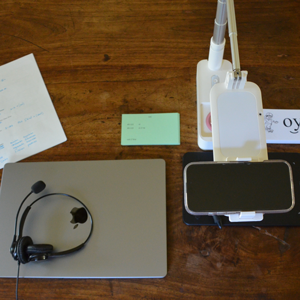
Let me start by explaining that the Orton Gillingham Methodology is educational therapy. It’s not a program or a curriculum. It’s systematic, cumulative, and multisensory approach to teaching. It creates a foundation, brick by brick. A typical session is approximately one hour in length. The session is divided into specific mini-lessons that move fast enough to keep an ADHD brain engaged but slow enough to ensure mastery is achieved over time. Even if your child doesn’t have ADHD, the session is designed to keep a child’s focus and prevent frustration from setting in. Using the Orton Gillingham methodology when developing a session means that it will include 8-10 different areas.
The Orton Gillingham approach is designed to teach the English Language by integrating Oral Language, Reading, Writing, and Spelling. The Orton Gillingham methodology focuses on the how and the why so that students go beyond memorization. I must admit I love delving into the why! Understanding why something is the way it is, allows you to remember it.
First let’s take a second and use Scarborough’s Rope to help explain the Orton Gillingham methodology. Scarborough’s Rope is a framework used to explain the complex processes that go into reading. There is a picture of a rope made up of different strands grouped into two sections. One section focuses on word recognition (decoding) while the other focuses on language comprehension (vocabulary, background knowledge, grammar). There are 8 strands in total and a strong reader needs to develop all 8 sections. Using the Orton Gillingham methodology allows you to integrate these 8 sections into every lesson plan.
The lesson starts with Language Development. This helps create a bridge between oral and written language. For example, I might talk about idioms in this section because a student needs to understand what an idiom is (an expression that has a meaning beyond the literal words) since we use them all the time. If a student hears the idiom “when pigs fly” the meaning will be lost if they do not understand that the expression means it will not happen. There are so many things that adults take for granted that children need to be taught. This section allows you to teach some of them.
After 5 minutes we move on to the next section: alphabet. This isn’t just about A-B-C; it’s about spatial awareness and the logic of our language system. Yes, we go through and recite the alphabet but we don’t sing it. Too often children don’t know the order of the letters without singing the entire alphabet song. Through continuous repetition and different practices we disconnect the letters from the song. This is also the section where we introduce dictionary and thesaurus skills. Students learn how to identify synonyms and antonyms and select appropriate words. Hopefully, you are beginning to see how rich the Orton Gillingham methodology when teaching students.
This is where the speed picks up. There are two separate decks that we drill. Why? Because we are building automaticity. Let’s face it. Mastery requires repetition. We want the brain to see a letter and fire off the sound without having to “think” about it. If they have to spend all their “brain power” decoding the sound of b, they have no energy left to understand the sentence. So in this section of the Orton Gillingham methodology the student first identifies the letter (or letters) that they have been taught. Then we move on to the deck with keywords and sounds and then it’s on to the next section.
This is a different set of cards and emphasizes the auditory. The cards are even a different color – green. I like to think of them as the flip side of the previous deck. These cards focus on the sounds and the student identifies the regular ways to spell the sounds. This practice helps solidify the sound-letter relationship. I say a sound—like /k/—and the student writes down all the ways they know how to spell it (ck, k, c). This connects the ear to the hand. It’s one thing to recognize a letter (reading); it’s another thing entirely to retrieve it from memory for spelling. This drill is done every single session because repetition is the friend of the brain.
This is the meat of the session. We introduce one new concept at a time. Maybe it’s a new suffix, or a rule about syllable division. The new concept is introduced using discovery learning in which the student “discovers” the pattern through guided discussion. This approach helps the student engage with the learning and own the discovery. The message is to underscore that the students aren’t bad at reading, they simply haven’t been given the key to the code…yet.
Now, we put that new learning into action. We need to practice lessons that have already been learned. In one session, the student might work on a word list, another session might focus on sentences. The essential part of the practice is that the words are controlled which means that the student has learned the concepts or rules. They are not asked to read words that they can’t decode. The practice is designed to provide wins not foster frustration. When I have a list of words or sentences, I like to ask my students to pick 3 numbers between 1 and 10 for the ones to work on. They have not seen the words before they pick but this little gesture provides the student with an element of control over their learning.
In a society where most people use their thumbs to type on their phone, this segment might seem anachronistic. But in fact, handwriting is an important part of the lesson. We teach cursive writing because the formation of letters occurs in one direction. There is much less lifting of the writing instrument off the paper. For our kids with dysgraphia or executive functioning challenges, the physical act of writing can be a bottleneck. We work on handwriting so that the hand knows how to move without thinking. This allows the brain to focus on spelling the words and writing the information.
This section focuses on the rules of spelling. We practice spelling words according to rules that they have already learned. For example, we might spell words with a final /k/. We start off with words ending in ck and k. Over time, we will add in words that end in ke, or c. We may utilize a grid and the student has to explain out loud the rules being used before spelling the word correctly. Other times, I will dictate a word, use it in a sentence, before asking the student to spell the word. The medium used to spell the word will be varied from paper to chalkboards, to white boards to a scratchy towel. The concept is to ensure that a student can hear the sounds, remember the rules, control their hands and write the word correctly. It’s a lot!
The lesson ends with a recap of the new discovery. I love to turn this around and ask the student to play teacher and explain the new learning to me. This helps me check for understanding and keep them focused. I want the student to walk away feeling like an athlete who just finished a workout, not a kid who just failed a test.
So now you have a general sense of what the Orton Gillingham methodology looks like. Think of an overall OG session as being made up of several mini sessions all interlinked. Review in one section not only helps that topic but builds a foundation that is used in other sections. It’s designed to provide the scaffolding your child needs, while providing repetition to lead to automaticity. The goal is independence and each child has a unique path.
If you are interested in the Orton Gillingham Methodology but are feeling overwhelmed, schedule a 15-minute consultation. Head over to our contact page.
Click Here
We’re often told by schools to trust the process, but when your child is guessing and struggling to spell simple words, that advice feels empty. If you’ve been searching for how to teach reading in a way that actually works, you’ve likely realized that more of the same isn’t the

Your kid looks at the word frame and says fame. It’s a word with similar letters but it changes the meaning. Are you exhausted by the guessing game? This post shares 5 keys on how to teach a dyslexic child to read. The Paradox Ever wonder why your dyslexic child

We value common sense. There are cookies on our site and you consent to the usage.
Manage your preferences:
Essential cookies enable basic functions and are necessary for the website.
Statistics cookies collect information anonymously to understand our website.
SourceBuster is used by WooCommerce for order attribution based on user source.
For exciting reading check out our cookie and privacy policy.