


Summer is about slowing down, being outdoors, and relaxing. School is the last thing on anyone’s mind. But every year, millions of kids forget a lot of learning. This post explains summer learning loss and five simple things you can do to keep your child moving forward.

Summer learning loss (summer slide) refers to the academic skills that students lose over the summer break. Researchers have been studying the concepts of summer learning loss for decades, and the data is pretty consistent: kids can lose anywhere from one to three months of reading progress over a single summer.
I see it every year. I’m on the school board of our local public school and in October we look at data that shows so many kids sliding backward over the summer. Summer learning loss may show a kid just reading at grade level in May, but by October the same child has fallen below grade level. The graph showing this decline looks like a downwards slide. Hence the term summer slide.
For a typical reader, that’s frustrating. For a child who is already behind – a child who has been working twice as hard as their peers just to keep up – that summer learning loss is significant. It can mean the difference between gaining ground and being further behind when school starts back up.
But summer learning loss is not inevitable. It is not something that automatically happens. And, it doesn’t have to happen to YOUR child. The research shows us that kids who read over the summer, largely maintain their skills.
We’re not talking about running a summer school program at your kitchen table or intensive summer tutoring sessions. We’re talking about small, intentional habits that add up to real protection for your child’s reading brain.
Let’s talk specifically about summer learning loss in middle school, because this age group is so often overlooked in conversations about reading intervention.
When kids are in kindergarten or first grade, everyone is watching. The reading benchmarks are front and center. But by the time a child hits sixth, seventh, or eighth grade, a lot of the formal reading support falls away, even if the need hasn’t.
Middle schoolers are expected to have figured reading out. On top of that, middle school is developmentally a really interesting time. These kids are separating from their parents, building their identity, and desperately caring what their peers think of them. The last thing a thirteen-year-old wants is to be seen struggling with something that is supposed to be easy.
So when summer finally arrives and the pressure of school lifts, anything that feels like school often disappears entirely. To a kid who struggles, reading is most often associated with stress. With struggle. With embarrassment. And who wants to spend their summer doing something that feels terrible?
One of the biggest mistakes well-meaning parents make is handing a struggling middle schooler a book that was chosen for them (usually from a teacher’s list) and expecting them to power through it. It doesn’t work.
Here’s what you can do instead: take your child to a bookstore or a library and let them browse. Let them pick something that actually interests them. A graphic novel. A book about basketball strategy. A book about fashion. A manga series. Whatever makes their eyes light up.
And if they gravitate toward audiobooks? Let them. For a child with dyslexia or reading challenges, audiobooks are actually a powerful access tool. They build vocabulary. They expose kids to complex sentence structures. They build the love of story, which is ultimately what keeps a reader wanting to read. Ideally, they listen to the audiobook and follow along with the book, but that isn’t always an option. Don’t sweat it!
The goal this summer is to keep the reading brain active and to rebuild a positive association with stories and language. Let them decide upon the path.
You might be thinking that your child would rather eat glass than read out loud with you. I get that. So let’s be a little creative.
Paired reading is a technique where you and your child read the same text together, out loud, at the same time. You’re both reading. You’re not correcting them. You’re just reading alongside them, like a co-pilot. When they feel confident enough, they give you a signal and you drop your voice so they can read solo. When they hit a tricky word, you smoothly join back in.
This works beautifully for middle schoolers because it takes the spotlight off of them. They’re not being evaluated. They’re just reading alongside a trusted person. And the research on paired reading is solid. It improves fluency, accuracy, and confidence, often in a relatively short amount of time.
Now, if that really isn’t an option (yes, that will happen), try framing it differently. “This book looks really interesting. Do you want to read it together?” Pick something you’re both genuinely curious about. I read the Ugly series about a futuristic dystopian society by Scott Westerfeld with my daughter. You’ll be surprised what ten minutes, three times a week can accomplish.
Okay, this one is my favorite because it requires NO effort. Are you ready? Turn on the captions.
That’s it. I’m serious. Go into your TV settings, your Netflix, your YouTube, whatever your kid watches, and turn on the closed captions. Then leave them on. All summer.
Here’s the science behind it: researchers at Dartmouth have found that kids who watch TV with captions on make measurable gains in reading skills because their eyes are constantly tracking words in real time, in sync with the spoken language they’re hearing. Their brain is matching sounds to print, over and over, without any of the stress or self-consciousness that comes with sitting down to read a book.
For a child who struggles with reading, this is actually a really big deal. One of the core challenges for kids with dyslexia is the connection between sounds and their written symbols. Using captions reinforces that connection naturally. You quietly change one setting and walk away.
If they push back because it feels distracting (and some kids do) give it a week. Most kids adjust quickly, and a lot of them end up preferring it because they don’t miss dialogue. Win-win.
Reading and writing are deeply connected – they reinforce each other. But again, I’m not suggesting you hand your middle schooler a journal and tell them to write about their feelings. We know how well that will go over!
There are other ways. Does your child love video games? Ask them to write a review of their favorite game. Do they follow a sports team? Have them write a recap of a recent game. Are they obsessed with a TV show or a YouTube channel? Let them write a fan theory or a reaction post. If you’re traveling, have them send a postcard to their grandparents. Encourage them to verbally say what they are going to write. This helps them clarify their thoughts before focusing on the mechanics of writing.
The format doesn’t matter. Writing captions, making lists, drafting a script for a video they want to make. It all counts. What you’re doing is keeping the connection between their brain and written language alive.
This last one is a little different.
Our brains (especially the learning and language centers) are most receptive in the morning, before they’ve been saturated with screens, social media, and the general noise of the day. For kids who struggle to read, this morning window is important.
Keep the first thirty to sixty minutes of your child’s day screen-free. No phone, no gaming, no YouTube. I know your teenager is going to push back on this. But here’s the thing – you don’t have to make it feel like school. Put some music on. Make breakfast together. Slide in a conversation between the eggs and the orange juice. The key is that language and literacy activities happen in that early window, before the brain gets busy with everything else.
Protecting the morning brain window is probably the single highest-leverage habit you can build this summer. It doesn’t cost anything. It doesn’t require a program. It just requires a little intentionality (plus some boundary-holding around the phone). Let’s keep that discussion for another post.
I want to say one thing about what not to do, because I periodically see this pattern.
Don’t turn summer into a pressure cooker. If every car ride becomes a drilling session, and every dinner comes with the question: “did you read today,” your child is going to associate literacy with conflict.
The goal this summer is to keep the momentum going, rebuild confidence, and make sure that when the next school year rolls around, your child is ready to engage. Not exhausted before they even walk through the school doors.
Small. Consistent. Low-pressure. That is your summer strategy.
Summer learning loss is real, and it disproportionately affects kids who are already working hard to keep up. There are things you can do that are low stress.
Tip one – let them choose their own eye or ear reading.
Tip two – try paired reading together, a few minutes a day, a couple of times a week.
Tip three – turn on captions. Change one setting and let the science do the work.
Tip four – find a writing opportunity that actually fits their world.
Tip five – protect that morning brain window before the screens take over.
None of these require you to be a reading specialist. None of them require a curriculum or a tutor or a special program. They just require intention and a little consistency.
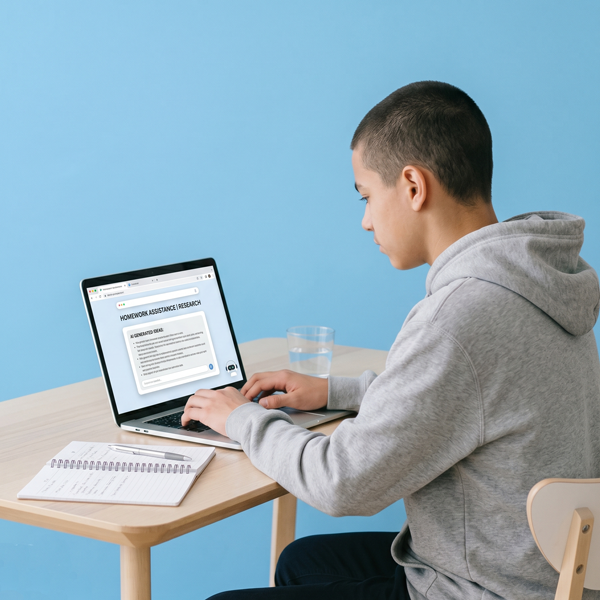
AI and education. Did you know that 9 out of 10 kids in middle and high school are using AI. It’s everywhere but what does it really mean for your child? The Research Common Sense Media (gotta love the name) released a study in 2026. They surveyed more than 1,200

There’s brain research that provides a reason for handwriting. It will change how you think about teaching handwriting. The Reason for Handwriting School are almost fully digital. Tablets in kindergarten, typing instruction by second grade, very little actual pencil-and-paper. Parents feel that something is missing. So, I went digging, because

We value common sense. There are cookies on our site and you consent to the usage.
Manage your preferences:
Essential cookies enable basic functions and are necessary for the website.
Statistics cookies collect information anonymously to understand our website.
SourceBuster is used by WooCommerce for order attribution based on user source.
For exciting reading check out our cookie and privacy policy.