

Somewhere between Elementary and High School the sentences in the books change. They get longer, twistier, and they start hiding who did what to whom inside layers of clauses. A perfectly fine reader in the lower grades can hit a wall without anything being wrong with them. New research suggests that sentence structure plays a critical role in how to improve reading comprehension.
First, let’s take a second and name what you’re actually seeing at home.
The kid who could read Magic Tree House books just fine is now staring at a paragraph about the Louisiana Purchase like it’s written in another language. The words themselves aren’t the problem. If you asked your child to read the sentence out loud, they could probably do it. Every single word. And yet the meaning slides right off.
But here’s the thing. Reading the words and understanding the sentences are two different parts of the equation. And around the fifth or sixth grade, those two strands split apart.
Why? Because the books change.
In the early grades, the sentences in your child’s books are short and friendly. The dog ran. Sam threw the ball. Subject, verb, done. But as kids progress in school, the sentences get longer, they get more twisted, and the meaning becomes hidden inside layers of clauses and phrases.
This is what educators call syntax. Let me give you the plain-English version. Syntax just means sentence structure. It’s the way words are arranged and connected so that a sentence means what it means. Who did what to whom, and in what order, and under what conditions. That’s it. For the rest of the post, I’ll refer to syntax as sentence structure, because that’s what it is.
Let’s get to the first key insight. Written language uses more complicated sentence structure than spoken language. Researchers have found that even children’s picture books use more complex sentences than many everyday conversations. Your child can talk to you all day long and never once bump into the kind of sentence that’s waiting for them on page forty-three of their science textbook.
Which is why a child can be a competent reader in the early grades and a struggling one a few grades later. They didn’t get worse. The sentences got harder. Nobody handed them the key to unlock this new structure. This is essential when investigating how to improve reading comprehension.
It’s important to give credit where it’s due. This post and the corresponding podcast episode was sparked by a fabulous article from Natalie Wexler, an education writer I deeply respect. Natalie wrote in her Substack about a study that researchers have been trying to do for years.
The study separated sentence structure from vocabulary and looked at the effects of both on reading comprehension. Why does that matter? Well, think about a hard sentence in a book. It usually has two problems. It probably has fancy words and a twisted sentence structure. When a child gets lost, up until now, we couldn’t tell if the vocabulary or the sentence structure tripped them up. This is essential when thinking about how to improve reading comprehension.
For decades, most people assumed the answer was vocabulary. That’s because we know that if you can’t decode at least 98% of the words, it negatively impacts comprehension. So by extrapolation, if you don’t know the vocabulary of 98% of words, comprehension is going to be impacted.
Teach the words, the thinking went, and comprehension will follow.
Let me take a minute and talk about the study. It was done with 161 sixth graders. The researchers built test sentences using simple, everyday words arranged in complicated ways. My favorite example: “The cat that the rat had bitten played on the ship.” Every word is a first-grade word. Cat. Rat. Ship. But who bit whom? A lot of us have to slow down for a beat, and we’re adults.
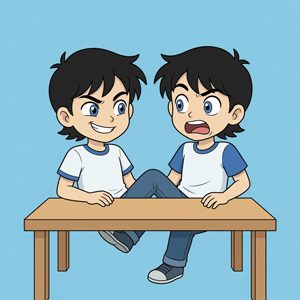
They also gave the kids what the researchers called whodunit sentences. Something like, “George was kicked by Sam under the table.” Then they asked one simple question. Who did the kicking?
If you know your way around sentence structure, it’s Sam. Obviously. But if you don’t have a strong grasp of sentence structure, that sentence might read like George kicked somebody, because George came first. First person, first actor. That’s how spoken language usually works.
Going back to the study. Vocabulary and sentence structure turned out to be two genuinely separate skills. There were kids with strong vocabularies who could not untangle complex sentences, and kids who could untangle the sentences but had weaker vocabularies. Knowing the words does not automatically mean you can follow the structure and vice versa.
Secondly, of everything they measured, understanding sentence structure was by far the strongest predictor of reading comprehension. Stronger than vocabulary, by a wide margin. In other words, sentence structure was a better predictor of comprehension.
For years, when a child couldn’t answer questions about what they read, teachers reached for vocabulary lists and comprehension strategies. Make an inference. Find the main idea. And meanwhile, the roadblock was sitting one level down, at the sentence level. Good to know when thinking about how to improve reading comprehension.
So you might be wondering, if sentence structure matters this much, why has no one at my child’s school ever mentioned it when discussing how to improve reading comprehension? There are a few reasons, and none of them are the teacher’s fault.
Natalie Wexler shares a story in her article that illustrates this perfectly. In fact, I’ve seen this moment play out when tutoring students. As Natalie highlights, a speech-language pathologist was working with a fourth grader on a social studies passage about pioneer territories. One sentence explained that land west of the Appalachian Mountains was divided into two territories. She asked the student to write a question about the text, and the student wrote, why were the Appalachian Mountains divided into two parts?
Hmmm. It was actually the land that was divided into two parts. The word land, the actual subject of the sentence, was sitting far away from the verb divided. The mountains were right next to the verb, so the brain grabbed the nearest noun and connected it to the verb. Unfortunately, it connected the wrong thing. The student was following a perfectly reasonable approach that works fine in conversations, but falls apart in complex sentences.
Worst of all, the student didn’t know he’d misread anything. As far as he knew, he understood the passage just fine.
So, this begs the question…How many of our kids will be sitting in classrooms quietly misreading sentence after sentence, with no idea it’s happening? The teachers have no idea about the need to know how to improve reading comprehension.
First of all, do not run out and buy a grammar workbook. It might feel like the obvious solution but it’s not. The research is pretty clear that memorizing grammar doesn’t move the needle on comprehension. A child can recite the definition of a subordinate clause and still get flattened by a sentence that contains one. Some studies have even found that traditional grammar drills make kids’ writing worse. That’s not what we want!
What matters isn’t naming the parts of a sentence. It’s grasping the meaning. Can a student read a tangled sentence and come out the other side knowing who did what? That’s the goal.
If you have a child who will tolerate it, read-alouds are one of the best sentence-structure tools we have. When you read aloud, your child gets to hear complicated sentences with your voice doing the untangling. Your pauses, your emphasis, your rhythm. That’s a guided tour through structures their ears would never meet in conversation.
One study found that preschoolers who’d been exposed to more varied sentence structures understood those structures better as they got older. Think of it as the soil gets prepared early.
However, it’s never too late to pick a books that is a notch above what they read on their own, and let them just listen.
Sentence structure is not a silver bullet. Comprehension is the result of many things: decoding, background knowledge, vocabulary, and syntax. A child who struggles to sound out words still needs that addressed first, and no amount of whodunit questions replaces accurate decoding.
But here’s the genuinely hopeful part, and it’s the reason I wanted to bring you this research. Vocabulary and background knowledge take years to build. It’s a long road. The rules of sentence structure? There aren’t that many of them. It’s a short list. Which means a focused effort can pay off faster than almost anything else in the comprehension toolbox.
So try one thing. One read-aloud, one whodunit question, one round of sentence combining. A huge thanks to Natalie Wexler, whose article inspired the podcast episode and this post. The article is well worth your time.
You’ve been told your whole life that real reading looks like a thick chapter book with no pictures. Real books are classic and timeless. Anything else is not “real” reading. That’s the wrong way to view graphic novels for kids and this post explains why. Graphic Novels for Kids Right

I recently sat down with two powerhouse guests who have devoted their careers to struggling readers: Laura Stewart, Chief Academic Officer at 95 Percent Group, and Brett Tingley, founder and president of Parents for Reading Justice. All three of us share something beyond our work. We are moms of struggling

We value common sense. There are cookies on our site and you consent to the usage.
Manage your preferences:
Essential cookies enable basic functions and are necessary for the website.
Statistics cookies collect information anonymously to understand our website.
SourceBuster is used by WooCommerce for order attribution based on user source.
For exciting reading check out our cookie and privacy policy.