

A struggling reader is most likely a kid who slipped past the early school years and then got very good at hiding it. They memorize, they guess, they lean on others. Their foundation is like Swiss cheese and you need to fill in the gaps.

Kids are incredible compensators. When reading is hard, they get clever. They memorize. They guess from the pictures. They listen closely in class so they can fake their way through the parts they can’t decode. Heck my daughter leaned on friends. There was always someone to read the directions out loud.
For a while, it works but eventually everything shifts. The pictures disappear. The books get longer. The words get bigger and stranger. Words like photosynthesis, constitution and inference start appearing. Multisyllabic words become the norm.
And all those clever workarounds? They stop working. What looks like a kid falling apart is usually a kid who was quietly holding it together for years, running twice as hard to get half as far.
It doesn’t help that there’s a myth that so many of us hear when we discover the older struggling reader. The myth goes something like this: If you didn’t catch it early, you missed the reading window. It’s too late.
Let me tell you plainly what the research and science actually says. The brain does not stop being able to learn to read at age nine. It stays flexible. It keeps building new pathways. We call it brain plasticity. Explicit, structured, instruction, the kind that structured literacy is built on, works for older kids and teens. Heck, it even works for adults. I’ve watched adults go from reading at a third-grade level to an eighth-grade level in six months. Six months.
So why does everyone act like there’s nothing that can be done for an older struggling reader?
Two reasons come to mind. First, because it is harder. But not for the reason you think. It’s not that the brain stopped learning. It’s that your child has spent years believing they’re not good at reading. It’s the confidence that’s harder to rebuild, not the reading. Shame is the real enemy. Not the age.
Think of it this way. Your child isn’t a machine that expired. Your child is more like a clock that just needs to run a little slower to keep good time. Nothing is broken. The gears are all there. They simply need to be oiled with the right instruction, taught in the right order, one sprocket at a time.
The second reason is money. Who is going to teach all those older students to become better readers? The reading specialists are working with the kids with IEPs, not a gen ed struggling reader. The science teacher never learned how to teach reading. You might be dealing with a mindset that believes that if we ignore the problem the kids will eventually age out and graduate? There’s a lot that could be said but I’ll save that for another episode.
Well, we’ve talked about the problem but that isn’t going to get us far. It’s time to move from why to what, as in what can you do?
Decoding, structured literacy, explicit instruction all work together. But the thing I want you to walk away with for your struggling reader isn’t just about reading. It’s also about the reader.
Your child is watching how you react to this. When you stay calm, when you treat their struggles as a puzzle to solve, you teach them how to see themselves. Help them name their struggle without shame. Becoming a better reader is hard work because there aren’t any shortcuts.
Back in 1984, about a third of thirteen-year-olds read for fun almost every day. Fast forward 4 decades and last year, only fourteen percent (14%) do. Most of those kids didn’t decide reading was boring. Instead, reading became harder and harder, until they quietly stopped reaching for a book. So if you do nothing else this week, do this. Let your struggling reader know that their reading is like Swiss Cheese and you’re going to work together to fill in the holes.
If you’re worried that your struggling reader has run out of time. The science behind how to improve reading doesn’t expire. An older struggling reader can still become a better reader. If you’d like a hand, building a plan for your child, I offer a free fifteen-minute consultation. No pressure, no pitch. Just two people figuring out the next step. You can find it over on my contact page.
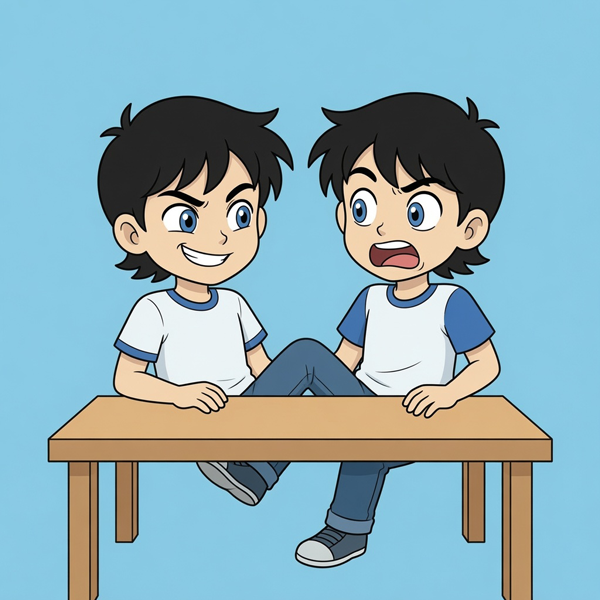
Somewhere between Elementary and High School the sentences in the books change. They get longer, twistier, and they start hiding who did what to whom inside layers of clauses. A perfectly fine reader in the lower grades can hit a wall without anything being wrong with them. New research suggests
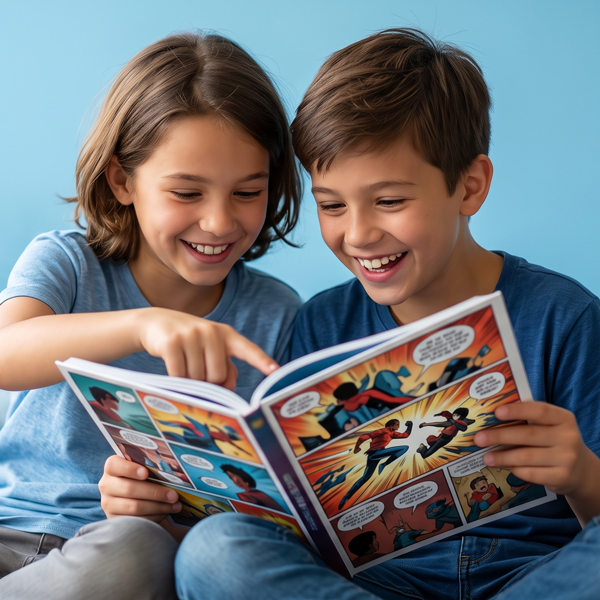
You’ve been told your whole life that real reading looks like a thick chapter book with no pictures. Real books are classic and timeless. Anything else is not “real” reading. That’s the wrong way to view graphic novels for kids and this post explains why. Graphic Novels for Kids Right

We value common sense. There are cookies on our site and you consent to the usage.
Manage your preferences:
Essential cookies enable basic functions and are necessary for the website.
Statistics cookies collect information anonymously to understand our website.
SourceBuster is used by WooCommerce for order attribution based on user source.
For exciting reading check out our cookie and privacy policy.