


First, let’s start with the pronunciation because it’s a bit tricky. It’s actually pronounced “dis-kal-KOO-lee-uh.” If we look at the morphology of the word we have “dys” from the Greek meaning difficult and calculare from Latin meaning to count. So taken together the word means difficulty counting and that is math in a nutshell. Remember: Dis-cal-KOO-lee-uh.
Now that we can actually say the word, let’s talk about what it is. People sometimes refer to the condition as math dyslexia. But that is like comparing apples to oranges. Great, if you are making a fruit salad, but we are not. Dyslexia and dyscalculia are two separate things. Dyslexia is difficulty reading. Dyscalculia is difficulty with math. I think people say “math dyslexia” because you get what they are referring to and 2) it’s impossible to pronounce dyscalculia. Think of dyscalculia as a specific learning disability that affects a person’s ability to understand, learn, and manipulate numbers. This is not about being “bad at math.” It’s a variation in the brain’s wiring that impacts a person’s number sense. It’s neurological in nature.
It might help if I provide an analogy and compare it to colorblindness. A colorblind person can see, but their brain processes color differently. You can show them red flashcards all day long, but they’ll never see the color red. Well, it’s the same with dyscalculia. No amount of rote memorization or endless flashcards will magically create a fundamental understanding of numbers. A dyscalculic person’s brain processes numbers in a completely different way.
For example, a child with dyscalculia might struggle to understand that the numeral ‘5’ represents a group of five objects. They might not grasp that a group of six is one more than a group of five, even if they can learn to count by rote. They often count on their fingers long after their peers have moved on to more advanced mental math.
Every person is unique so the symptoms of dyscalculia can vary from person to person. These challenges can continue to impact daily life, showing up in adulthood as:
As with most of the “dys” conditions, a formal diagnosis is made through a comprehensive evaluation by a qualified professional, such as a neuropsychologist. They’ll consider the individual’s developmental history, classroom performance, and use normative-referenced standardized tests. These tests look for specific indicators such as:
If you suspect your child may have dyscalculia, discuss your concerns with their teacher and pediatrician to begin the process of having your child evaluated. The goal of any evaluation is not to label someone, rather it is to help them understand the issue and find solutions to their struggles.
Some conditions co-exist. For instance, a high percentage of individuals with dyslexia also have difficulties with math. This may be why some refer to the condition as math dyslexia. Similarly, dysgraphia can also overlap with dyscalculia. Think of these as the “3 dys” dyslexia (difficulty reading); dysgraphia (difficulty writing); dyscalculia (difficulty with math). A child with dysgraphia may struggle to write numbers clearly, keep their work organized in columns, or even use a pencil effectively, all of which can compound the challenges of solving a math problem.
Which brings us to the next step, discussing what you, as a parent, can do to help your child if you’ve been told they have math dyslexia. Let’s share hands-on things that you can do:

The IDA definition of dyslexia is changing! This could have significant implications for how we support individuals with dyslexia. The International Dyslexia Association (IDA) is soliciting input from the public regarding the new definition. Why did they decide that this change was needed? What impact will it have? Let’s start
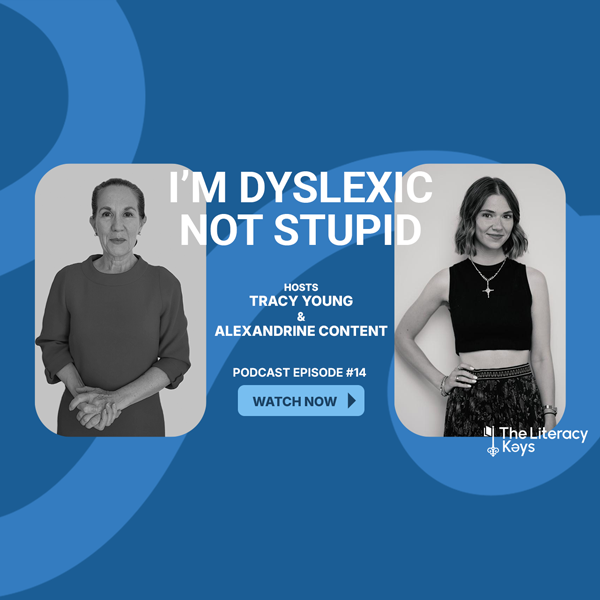
This post is taken from a podcast available on Spotify, Apple, and YouTube. It’s a conversation between a mother (Tracy) and her daughter (Alexandrine) as they explore the question: “Am I dyslexic?” The conversation highlights some of the hurtful things that have been said and the power of perseverance. Tracy: